Gamification & Player Retention - iGaming UX Case Study
A retention system built around player motivation, not financial incentives.
· Designed a gamification system for an iGaming platform to reduce churn and drive reactivation - without relying on financial incentives that players simply withdrew. · Led end-to-end as Product Designer: discovery, OKRs, wireframes, UI design, and back-office CMS. · Delivered 33% higher weekly retention, average deposits nearly doubled, 20% margin uplift per active player.
· Designed a gamification system for an iGaming platform to reduce churn and drive reactivation - without relying on financial incentives that players simply withdrew. · Led end-to-end as Product Designer: discovery, OKRs, wireframes, UI design, and back-office CMS. · Delivered 33% higher weekly retention, average deposits nearly doubled, 20% margin uplift per active player.
Company
Valsea Technologies
My Role
My Role: Product Designer
My Role: Product Designer
Industry
Industry: iGaming
Date
Date: November 2022
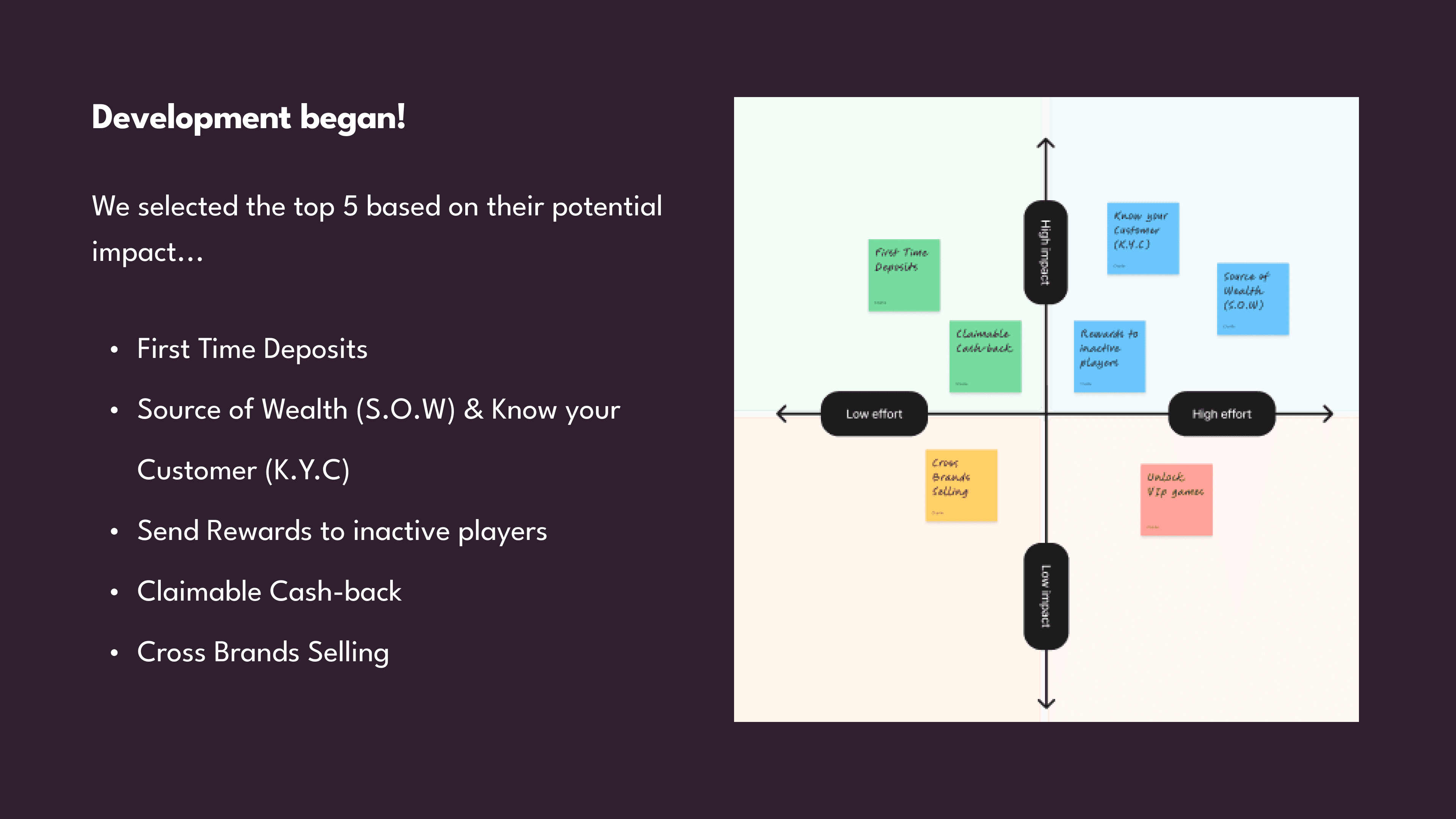
· Giving players money wasn't working. They withdrew it and left. The real problem was that nothing about the product created a reason to come back. · Every competitor offered the same games. Competing on content was a dead end - the experience around the games had to become the differentiator. · Research identified three motivators players respond to: progress, recognition, and surprise. The product was delivering none of them. That became the brief.
· Giving players money wasn't working. They withdrew it and left. The real problem was that nothing about the product created a reason to come back. · Every competitor offered the same games. Competing on content was a dead end - the experience around the games had to become the differentiator. · Research identified three motivators players respond to: progress, recognition, and surprise. The product was delivering none of them. That became the brief.
· Giving players money wasn't working. They withdrew it and left. The real problem was that nothing about the product created a reason to come back. · Every competitor offered the same games. Competing on content was a dead end - the experience around the games had to become the differentiator. · Research identified three motivators players respond to: progress, recognition, and surprise. The product was delivering none of them. That became the brief.
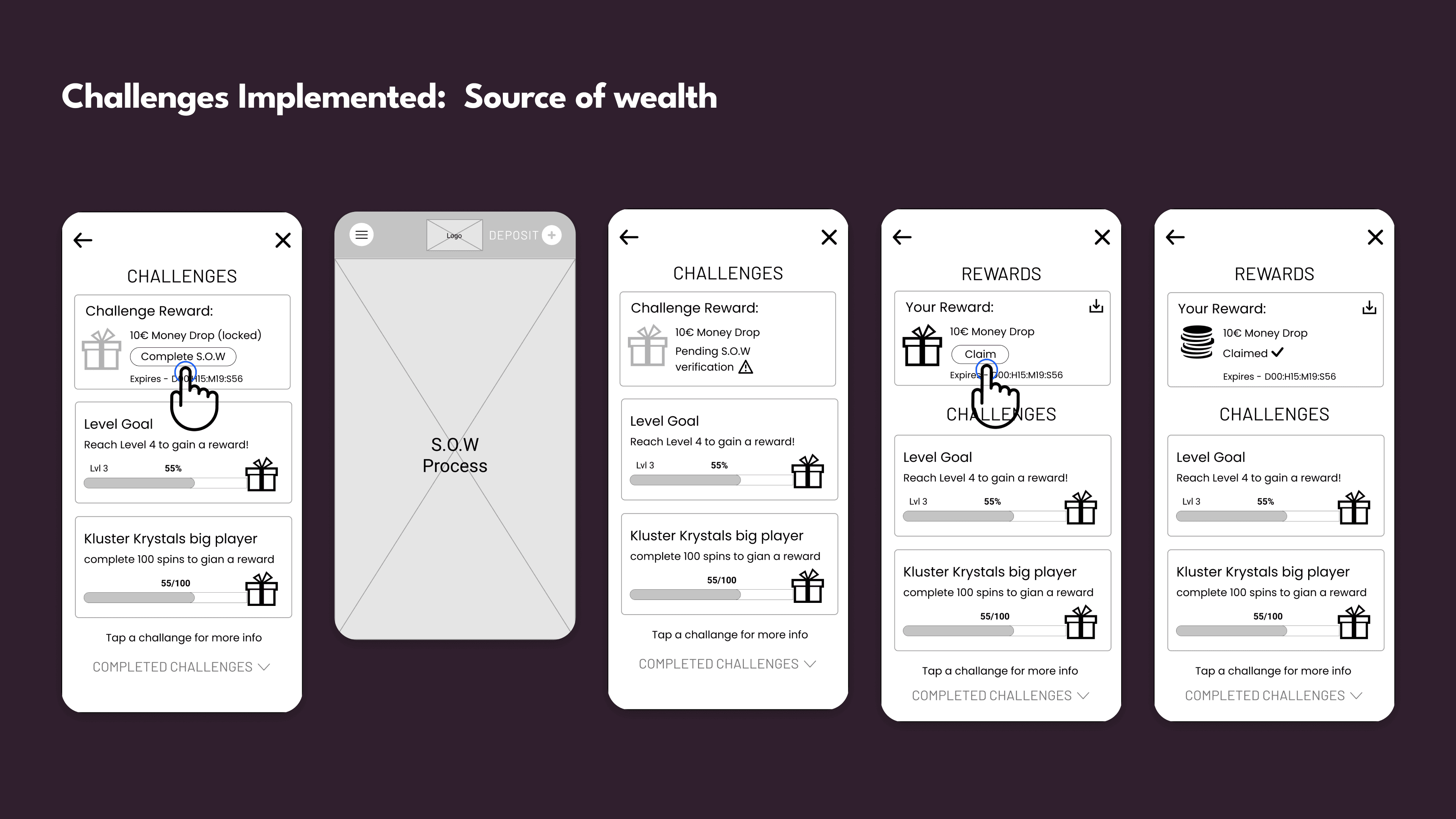
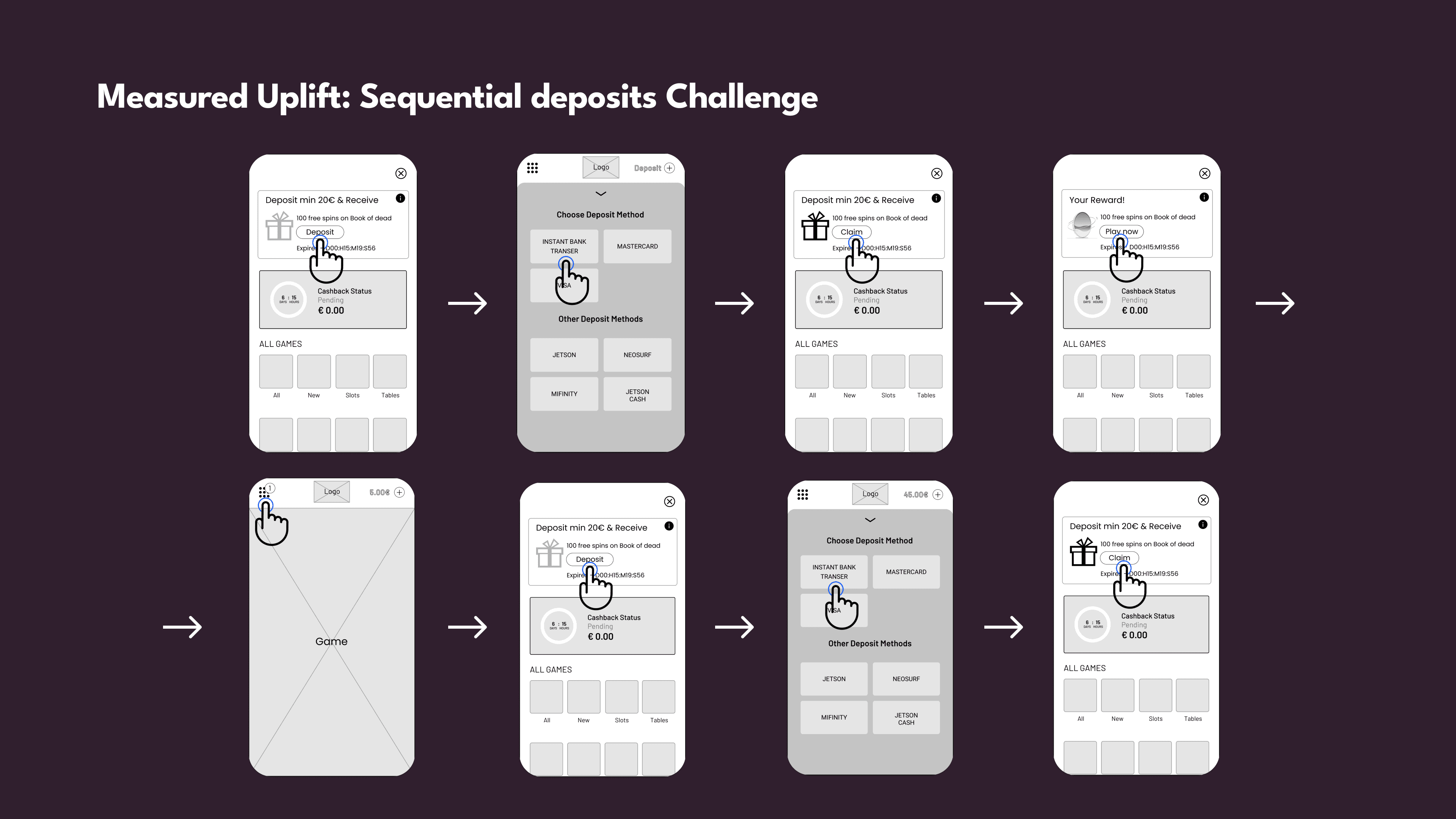
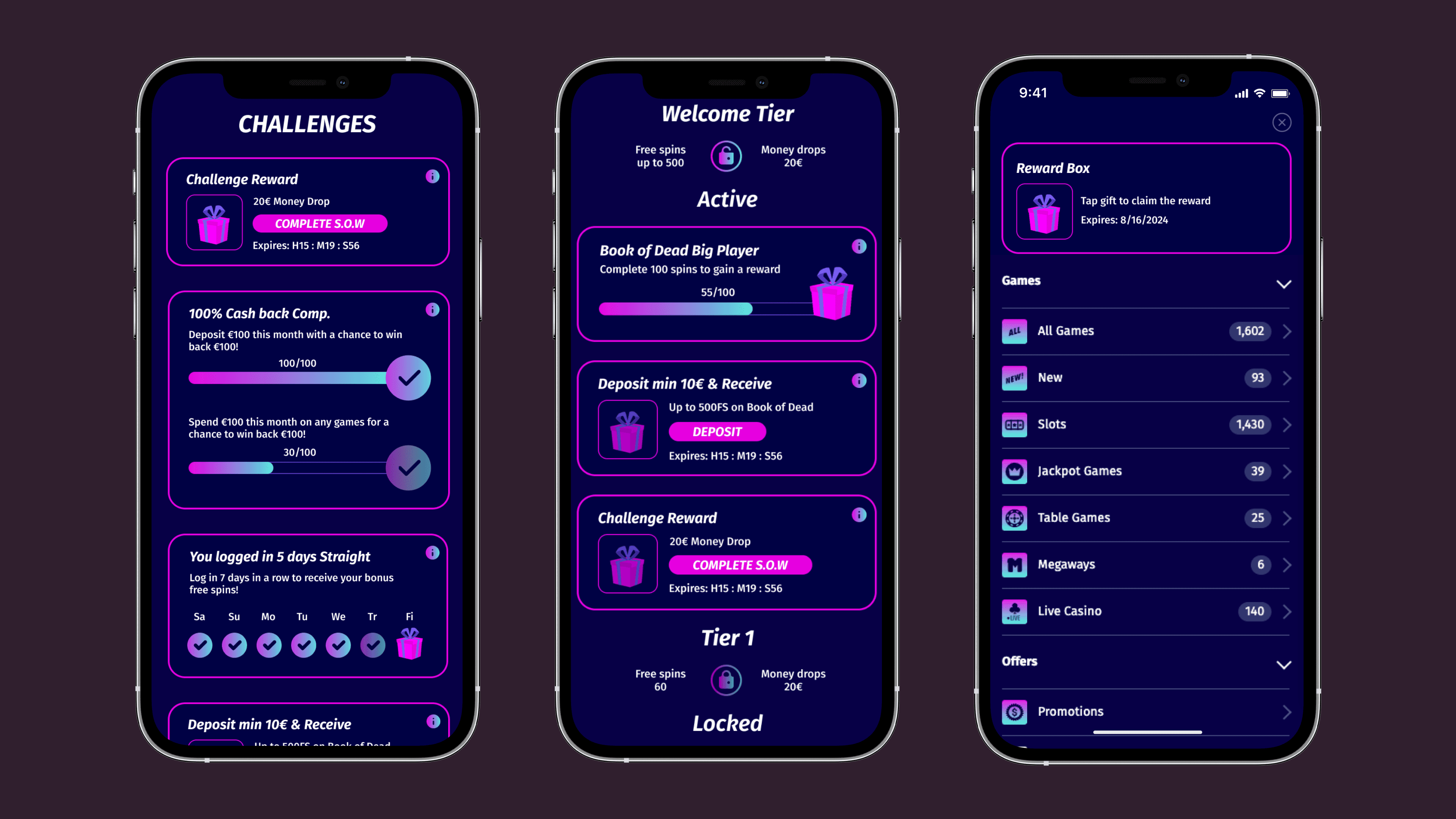
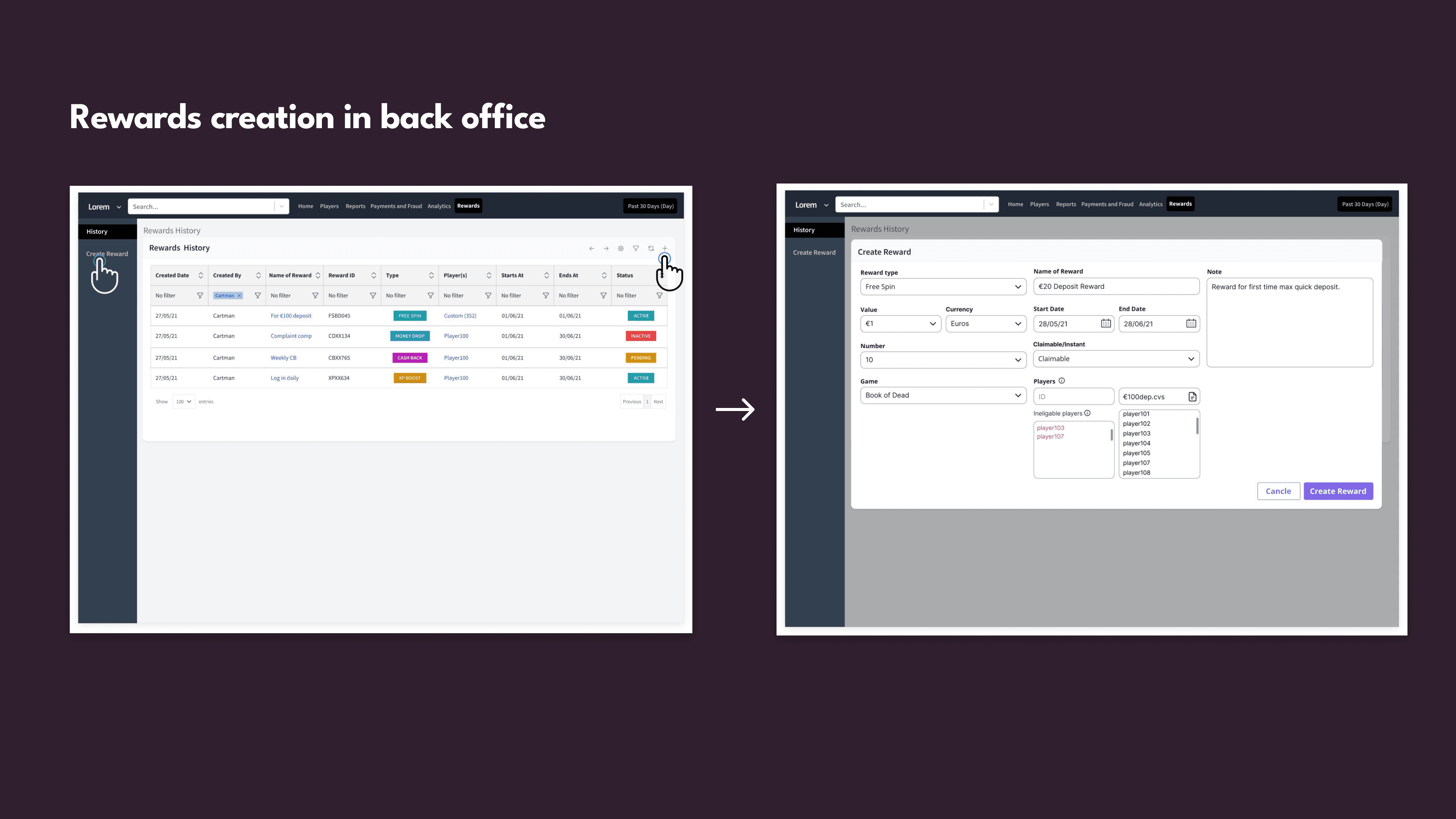
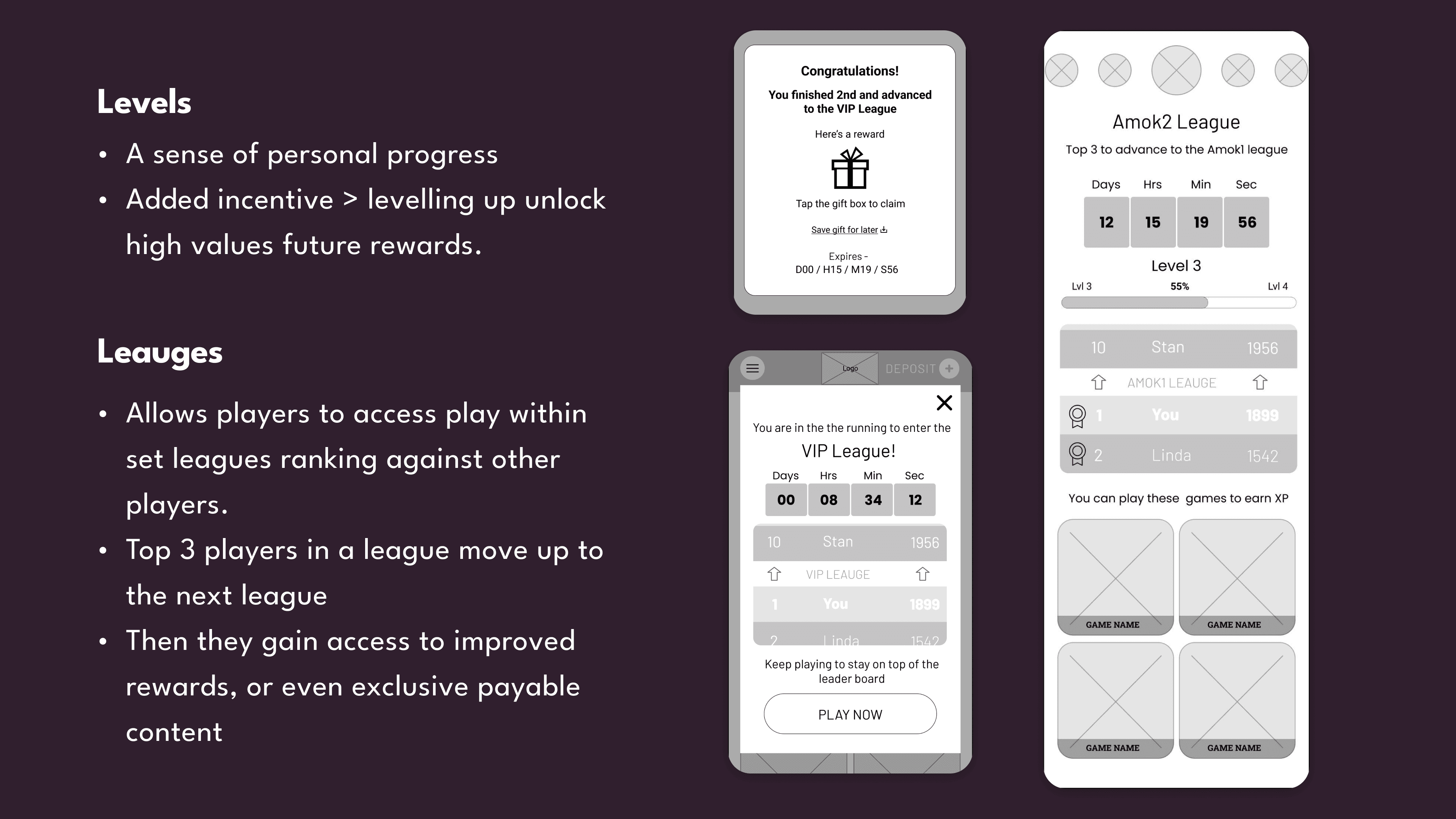
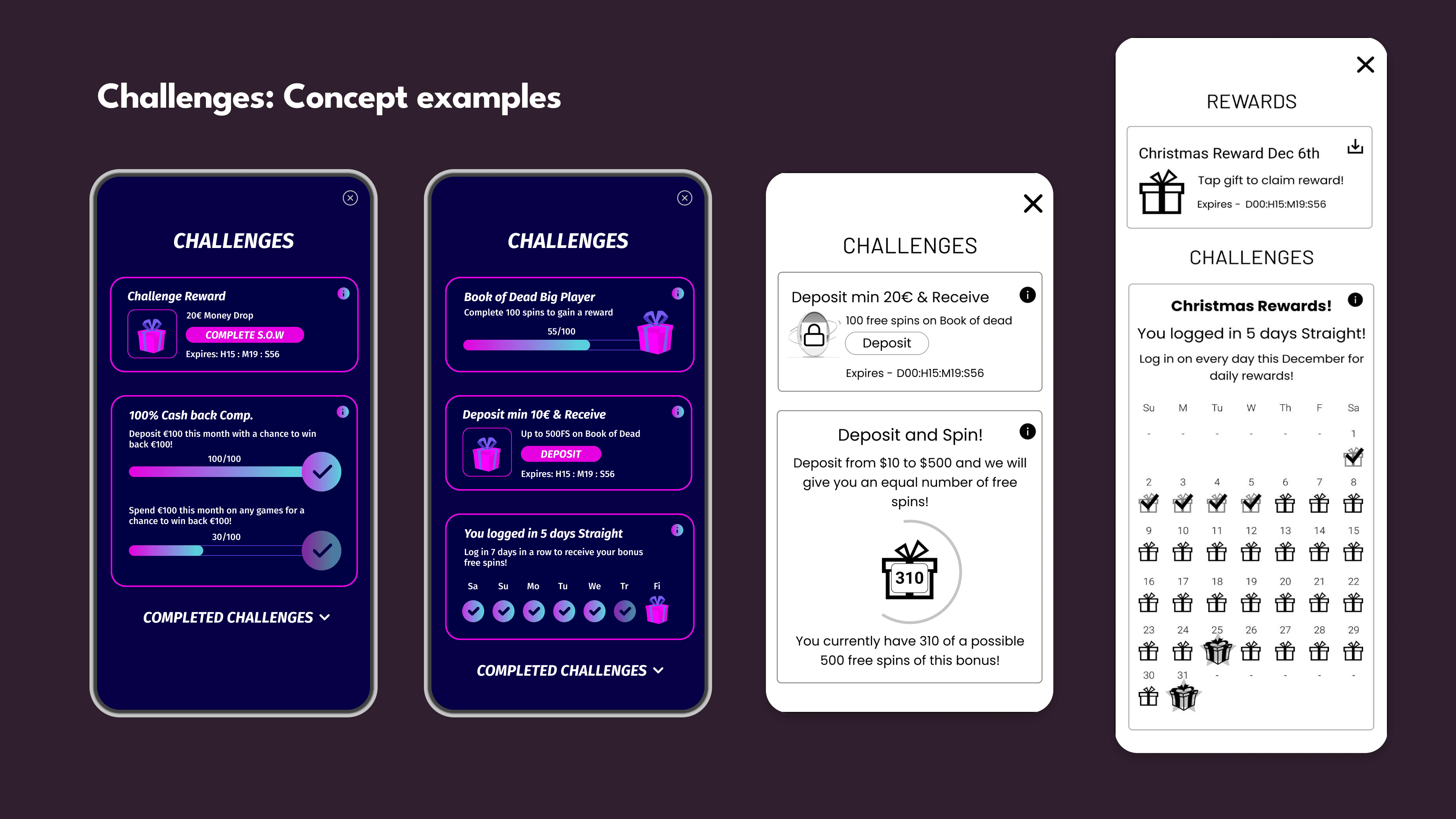
· Players needed to feel something was waiting for them. Mystery boxes - containing free spins, money drops, or XP boosts were designed to create that anticipation without a guaranteed reward. · Sequential challenges gave players a visible path forward. Completing one unlocked the next, with rewards scaling upward. The product stopped being something you visited and became something you were progressing through. · Scaling reward delivery across multiple brands at code level was too slow. A back-office CMS put that control directly in the hands of CS and VIP teams - rewards could now respond to individual player behaviour in real time.
· Players needed to feel something was waiting for them. Mystery boxes - containing free spins, money drops, or XP boosts were designed to create that anticipation without a guaranteed reward. · Sequential challenges gave players a visible path forward. Completing one unlocked the next, with rewards scaling upward. The product stopped being something you visited and became something you were progressing through. · Scaling reward delivery across multiple brands at code level was too slow. A back-office CMS put that control directly in the hands of CS and VIP teams - rewards could now respond to individual player behaviour in real time.
· Players needed to feel something was waiting for them. Mystery boxes - containing free spins, money drops, or XP boosts were designed to create that anticipation without a guaranteed reward. · Sequential challenges gave players a visible path forward. Completing one unlocked the next, with rewards scaling upward. The product stopped being something you visited and became something you were progressing through. · Scaling reward delivery across multiple brands at code level was too slow. A back-office CMS put that control directly in the hands of CS and VIP teams - rewards could now respond to individual player behaviour in real time.
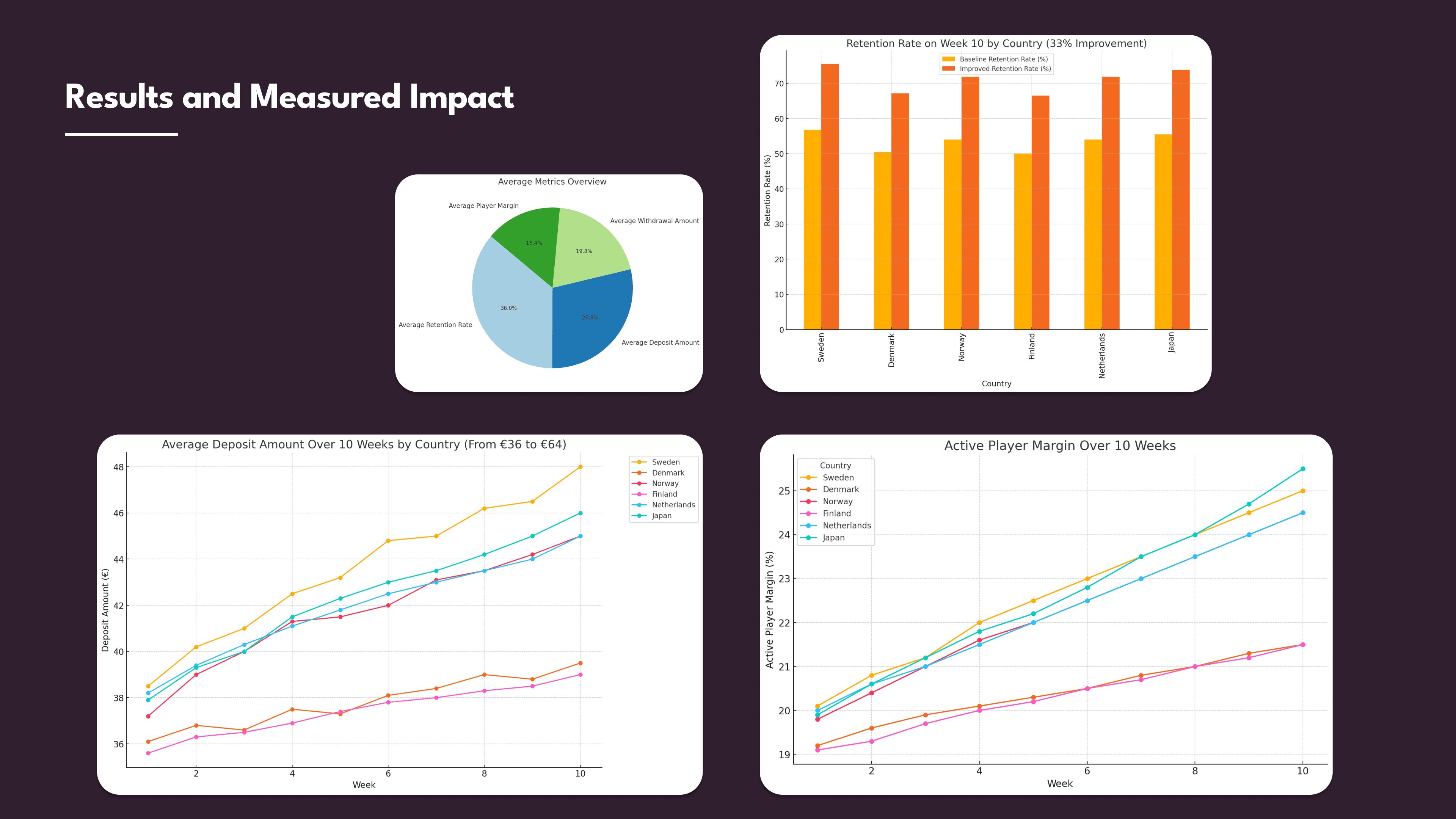
· Weekly retention in the first 10 weeks increased by 33% · Average deposit value rose from €36 to €64 per player · Margin per active player per week increased by 20% · Players returned because the product gave them a reason to - not because they were paid to. That distinction is what made the results sustainable
· Weekly retention in the first 10 weeks increased by 33% · Average deposit value rose from €36 to €64 per player · Margin per active player per week increased by 20% · Players returned because the product gave them a reason to - not because they were paid to. That distinction is what made the results sustainable
· Weekly retention in the first 10 weeks increased by 33% · Average deposit value rose from €36 to €64 per player · Margin per active player per week increased by 20% · Players returned because the product gave them a reason to - not because they were paid to. That distinction is what made the results sustainable
Get in touch today to discuss how I can help you unlock your products 2.0! Let’s get on a call and make it happen with intuitive and impactful design solutions.
Get in touch today to discuss how I can help you unlock your products 2.0! Let’s get on a call and make it happen with intuitive and impactful design solutions.
Get in touch today to discuss how I can help you unlock your products 2.0! Let’s get on a call and make it happen with intuitive and impactful design solutions.